A massage gun can feel like a quick fix after a hard workout, a long desk day, or hours in Kilimani traffic. Used well, it can help muscles feel less tight. Used carelessly, it can leave you more irritated than relaxed.
The smart approach is simple. Know what the tool can do, what it cannot do, and when a hands-on treatment still makes more sense. That keeps the focus on comfort, not hype.
Key Takeaways
- A massage gun uses fast pulses on soft tissue, so it works best on muscles, not joints or bones.
- Short sessions can help with temporary soreness, stiffness, and warm-up before activity.
- People with injuries, pregnancy, blood-clotting disorders, neuropathy, recent surgery, or other medical conditions should ask a clinician first.
- Pressure, timing, and placement matter more than brand names or fancy attachments.
- A massage gun can support recovery, but it does not replace proper treatment when pain is sharp, swelling appears, or numbness starts.
What a massage gun does, and what it doesn’t
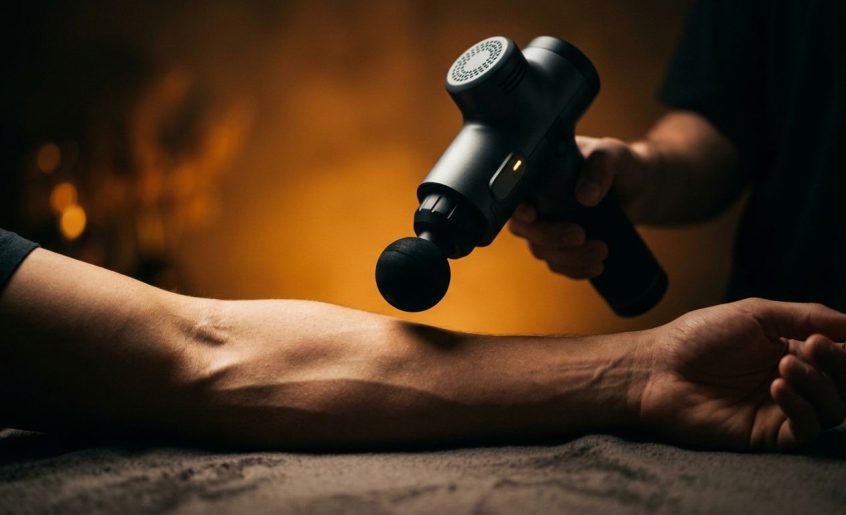
A massage gun sends repeated pulses into muscle tissue. That percussion can create a warm, loose feeling in areas like the calves, quads, glutes, shoulders, and upper back. It works best on soft tissue, not on the spine, front of the neck, or bony spots.
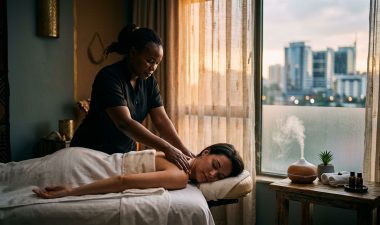
The tool is useful, but it is not the same as skilled touch. A Massage Therapist can change pressure during a Swedish Massage, Deep Tissue Massage, Thai Massage, or Full Body Massage in a way a device cannot. A quick massage video can show basic hand position, yet it will not tell you whether a sore spot needs rest instead of more treatment.
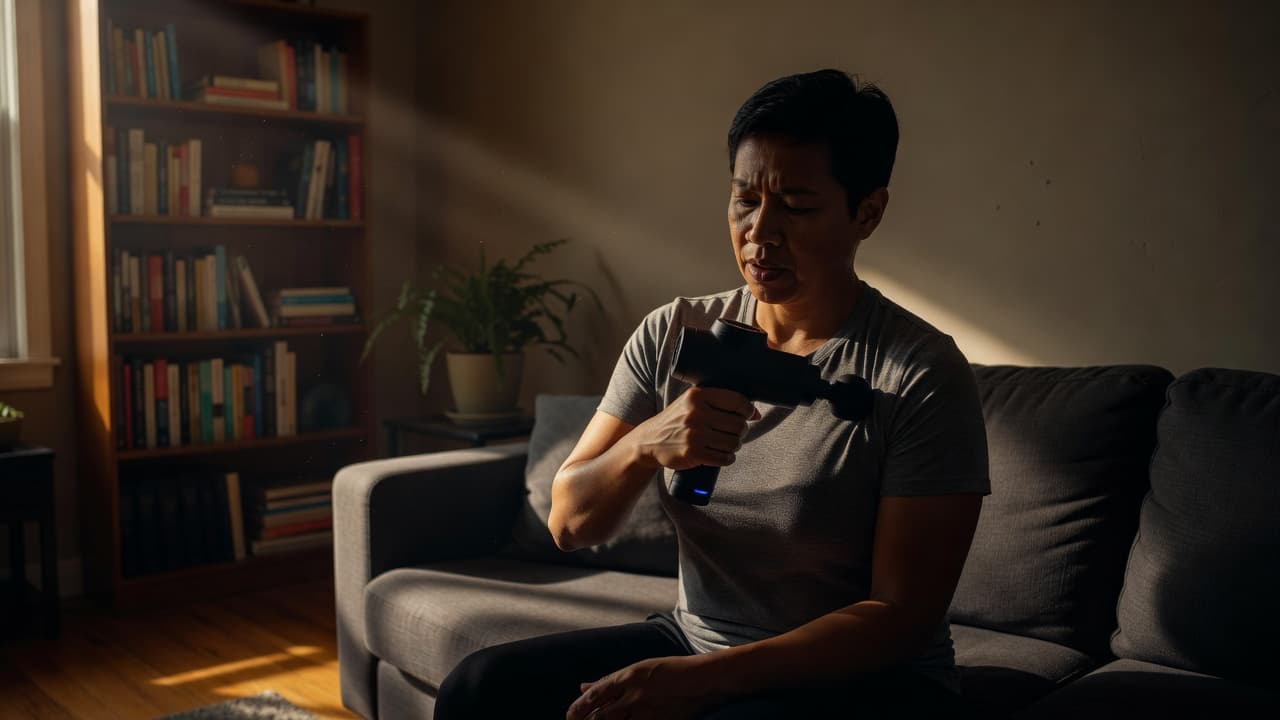
That difference matters when you want more than local muscle work. A spa session can cover the body in a broader, calmer way, while a massage gun is better for one or two tight areas at a time.
Benefits that are realistic, not exaggerated
The biggest draw is simple: many people feel less tight after a short session. A massage gun may also help you warm up before exercise, loosen stiff legs after sitting, or make stretching feel smoother. Some readers use it on the upper back after travel, then switch to a Foot Massage or a Foot Massager for the lower legs.
Research on percussive tools is still limited, so it helps to keep expectations grounded. The University of Utah Health guide on massage guns and safe use says to let the tool do the work and to keep time on one area short.
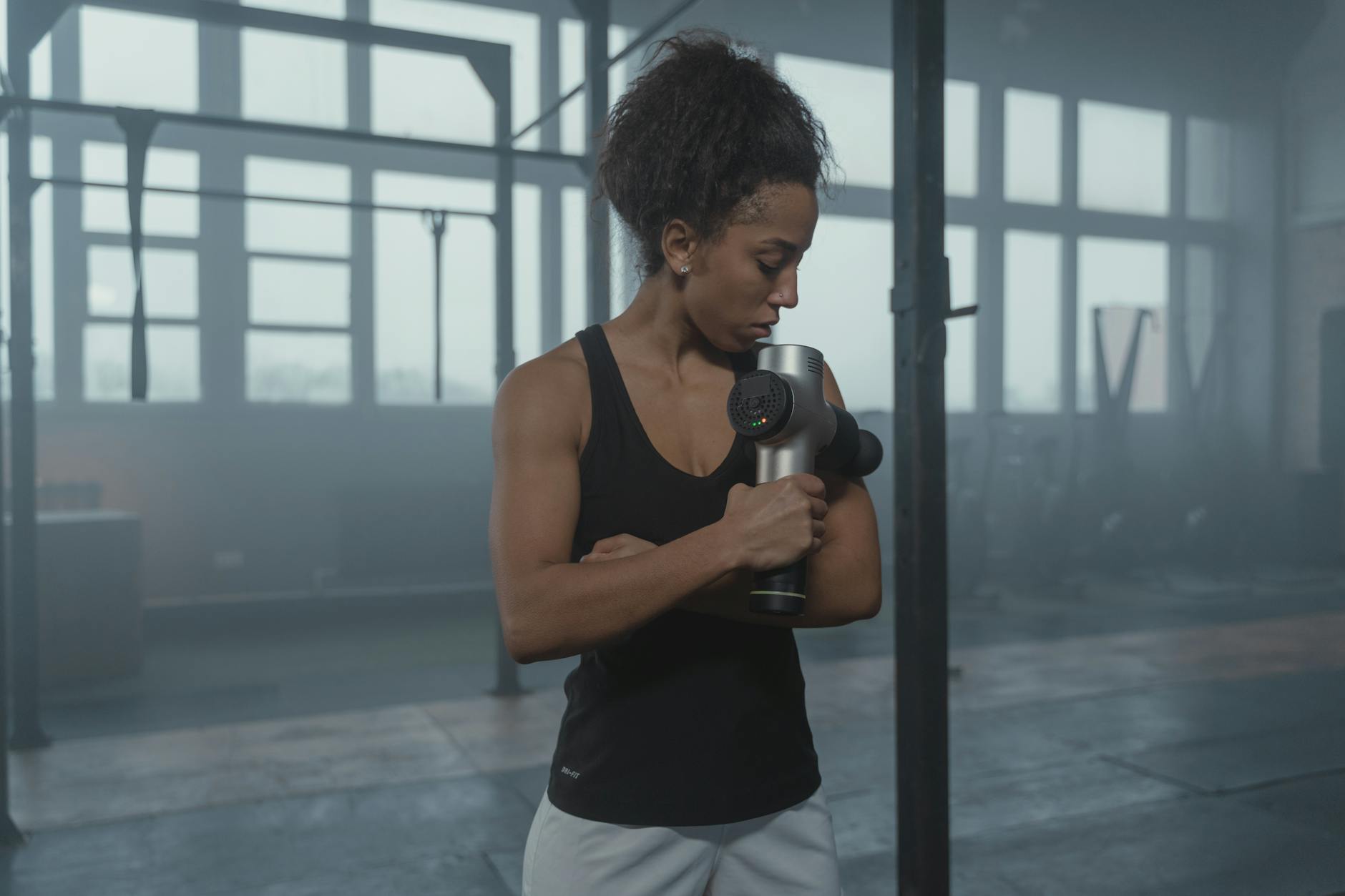
Photo by Tima Miroshnichenko
Pressure should feel firm, not punishing. If the area gets hotter, sharper, or numb, stop.
A massage gun can support comfort, but it does not fix torn tissue, nerve pain, or a problem that needs diagnosis. If pain is sharp, spreading, or paired with swelling, that is a sign to pause and get checked.
How to use a massage gun safely
Start with the lowest speed. Let the head glide slowly across the muscle for 15 to 30 seconds, then check how the area feels. If it feels better, you can repeat for a short time. If it feels worse, stop.
- Start on the lowest setting and test the feel.
- Keep the head moving across soft tissue.
- Use light pressure and let the tool do the work.
- Spend only a short time on one area.
- Stop right away if pain increases, bruising appears, or numbness shows up.
People with injuries, pregnancy, blood-clotting disorders, neuropathy, recent surgery, or other medical conditions should ask a qualified professional before using one. The same caution applies if you take blood thinners or have unexplained pain.
A short session before exercise can help some people feel looser, but timing matters. A physio guide on common massage gun mistakes warns against using one too soon before explosive training or strength work.
What to compare before you buy
Choosing the right device is less about marketing and more about control. The best massage gun for one person may feel too strong, too heavy, or too noisy for someone else.
| Feature | What to look for | Why it matters |
|---|---|---|
| Speed settings | Several levels, with a gentle first option | Helps you ease in instead of overdoing it |
| Pressure feel | Smooth power without harsh vibration | Makes the session more comfortable |
| Weight and grip | Easy to hold with one hand | Matters if you use it on shoulders or back |
| Battery life | Enough for multiple short sessions | Reduces charging stress |
| Noise level | Quiet enough for home use | Makes it easier to relax |
| Attachments | A few useful heads, not just many heads | Different shapes suit different muscle groups |
If you shop around, you will see names like Massage Envy, Hand and Stone Massage, Elements Massage, Massage heights, and retailers such as Massage Warehouse. The label matters less than how the device feels in your hand and how calmly it behaves on sore tissue.
How it fits with spa massage in Kilimani
Local searches show how much people want convenience. Many type Massage Near me, Massage Spa Near me, Massage Places Near Me, Massage Therapy Near me, Massage Near Me Current Location, Massage Near Me Open Now, Foot Massage Near me, or Massage Parlour Near Me when they want something close. In Kilimani, that turns into Massage Spa Nairobi, massage Nairobi, Nairobi Massage Near me, Nairobi Massage Center, Nairobi Massage parlour, Nairobi Massage ladies, Nairobi Massage Therapist, Nairobi Massage spa telegram, and Nairobi Massage ads. For readers comparing a device with a visit, current massage rates make the budget side easier to judge.
A massage gun can fit between spa visits, but it does not replace the feel of a skilled session. Swedish Massage and Deep Tissue Massage create a different response from percussion. So do Lymphatic Massage and Lymphatic Drainage Massage, which should come from a trained professional. The same goes for Asian Massage, Body Massage, or a calming Full Body Massage in a quiet room.
Some people also like a Massage Chair or a Foot Massager at home. Those can help with relaxation, but they still feel different from a therapist’s hands. If you want the full spa experience, a device is a helper, not a substitute.
Common mistakes that make it less useful
The fastest way to ruin a good session is to press too hard. A massage gun is not supposed to feel like punishment. If you brace your body or hold your breath, the pressure is probably too much.
Another mistake is staying on one spot for too long. Muscle tissue can get irritated fast, especially near the neck, ribs, or joints. Move slowly, then stop and reassess.
Using it over bruises, swelling, open wounds, or fresh injuries is also a bad idea. If an area feels hot, unstable, or sharply painful, skip it.
People sometimes use a massage gun right before demanding training, then wonder why the muscle feels flat or tender. That is where timing matters more than enthusiasm.
Conclusion
A massage gun works best as a small, precise tool. It can ease tight muscles, help you warm up, and make recovery feel more manageable after a busy day in Kilimani. It cannot replace medical care, and it cannot match the hands-on judgment of a trained Massage Therapist.
Use it gently, keep sessions short, and pay attention to the body’s signals. When pain is sharp or something feels off, step back and choose professional care instead. That balance keeps the tool useful, and it keeps your body safer.