A good foot massage can change the feel of your whole day, especially after long walks, standing work, or a busy Nairobi commute. It gives tired feet a break and often leaves the rest of the body feeling calmer too.
You don’t need fancy equipment to start. A few steady strokes, a little pressure, and the right pacing are enough to make it useful.
If you’ve been wondering what makes foot work feel so good, the basics are simple, and the details matter.
Key Takeaways
- A foot massage works best with slow, steady pressure.
- The heel, arch, ball of the foot, and toes respond well to gentle focus.
- You can do a useful session at home with oil, lotion, or a warm towel.
- Stop if pain is sharp, and avoid massage over injuries, swelling, or skin problems.
- In Kilimani, a clean room and a trained Massage Therapist matter more than flashy search terms.
What a Foot Massage Does for Tired Feet
Feet carry your full weight all day, so they often need more attention than they get. A calm session can soften tight muscles, warm stiff joints, and help the feet feel less packed with tension.
WebMD’s overview of foot massage health benefits points to better circulation and less stiffness, while AIAM’s summary of foot massage benefits highlights flexibility and tension relief. Those are simple wins, but they matter when your feet feel heavy at the end of the day.
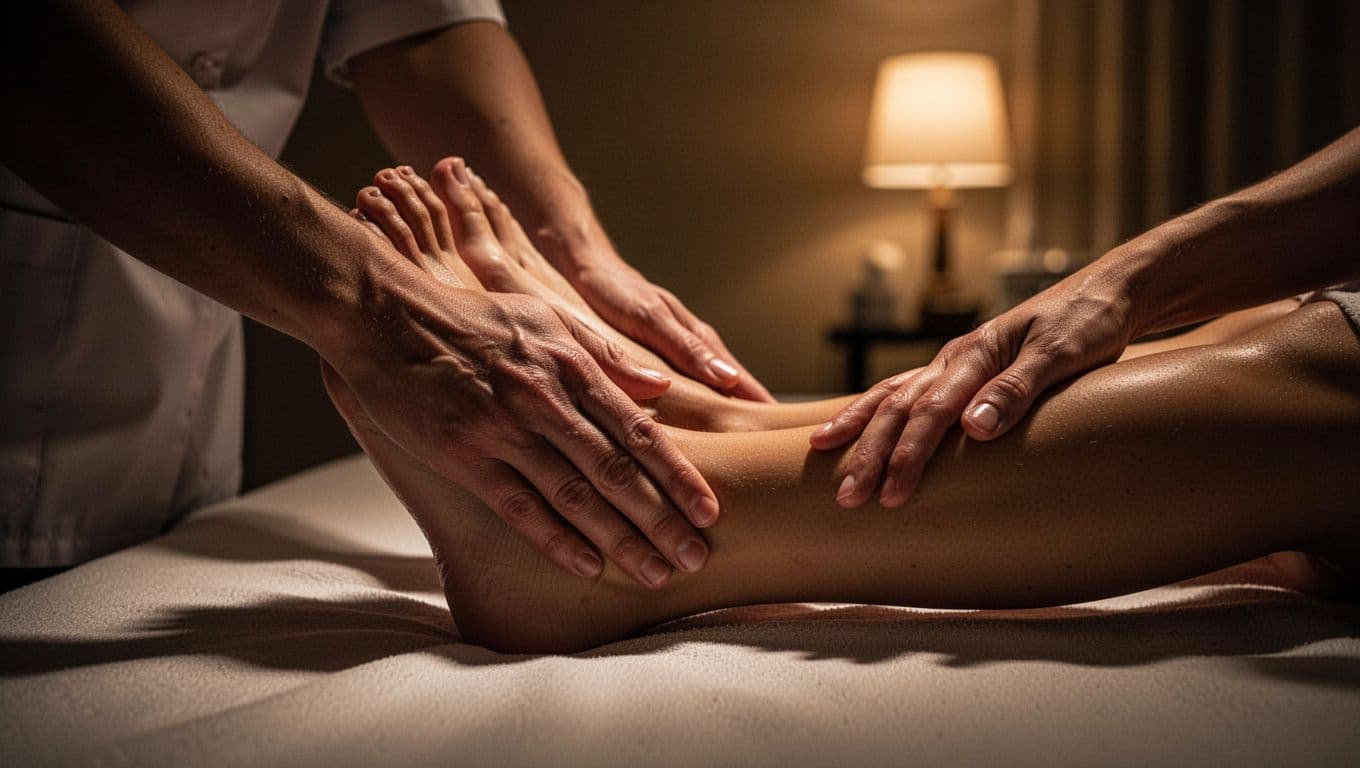
The experience also feels personal in a way that many other treatments don’t. A warm hand on a sore arch or a slow thumb circle around the heel can feel like the body finally getting a clear signal to settle down.
Pressure Points That Matter Most
A beginner doesn’t need to memorize a full reflexology map. A solid foot massage starts with the parts that do the most work and respond well to steady pressure.
Start with the heel and arch
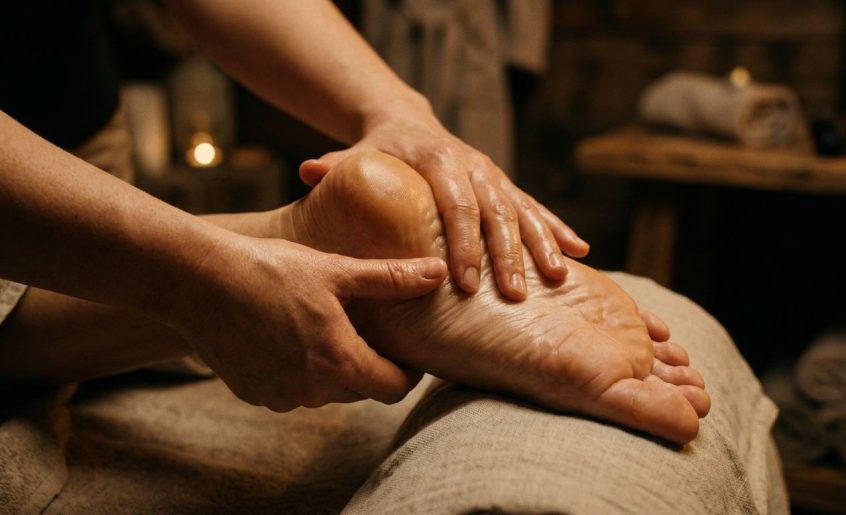
The heel often holds more tension than people expect. Slow circles with the thumbs can help loosen that area without making it feel bruised.
The arch likes long, even strokes. Use your thumbs or the heel of your hand and move from the center toward the toes. Keep the pressure firm but controlled.
Finish with the ball of the foot and toes
The ball of the foot can feel tender, so lighter pressure usually works better there. Small kneading motions are enough.
Toe work should stay gentle. A light pull, a soft squeeze, or a slow rotation can finish the session without making the foot feel overstimulated.
The top of the foot needs a softer touch. The bones sit close to the skin, so light strokes are safer than deep pressure there.
A Simple Foot Massage Routine for Home
A short home routine can take ten minutes and still feel worthwhile. A clear Massage video can help you match the rhythm before you try it yourself.
- Wash your hands and warm the feet with a towel.
- Apply a small amount of lotion or oil.
- Glide from heel to toes a few times to relax the skin.
- Work the arch with both thumbs, using slow, even passes.
- Press around the ball of the foot, then gently move each toe.
Use one hand to support the foot while the other does the work. That keeps the foot steady and helps you avoid pushing too hard.
Pressure should feel firm and controlled. If it turns sharp or electric, stop.
If you want more ideas, Medical News Today’s foot massage techniques are easy to follow and fit well with a beginner routine.
Oils, Tools, and Small Aids
Simple products often work better than complicated ones. A basic unscented lotion, grapeseed oil, or a small amount of coconut oil can give enough glide for the hands to move smoothly.
A warm towel before the session helps too. It loosens the skin and makes pressure feel less abrupt.
If you like home tools, a Foot Massager can give steady pressure without much effort. A Massage Gun can help on the calf or outer lower leg, but keep it off bony areas on the foot. A Massage Chair is useful for general relaxation, although it won’t replace focused work on tired soles.
A little care with products matters. Strong scents can bother irritated skin, so patch-test anything new first.
Finding a Good Foot Massage in Kilimani
Search results in Nairobi can be noisy. People type Massage Near me, Massage Spa Near me, Massage Spa Nairobi, massage Nairobi, Nairobi Massage Near me, Foot Massage Near me, Massage Near Me Current Location, Massage Near Me Open Now, Massage Places Near Me, Massage Therapy Near me, Massage Parlour Near Me, and Nairobi Massage Center, but those phrases don’t tell you much about the actual experience.
Some listings also throw up terms like Nairobi Massage ladies, Nairobi Massage ads, Nairobi Massage spa telegram, Nairobi Massage parlour, and Nairobi Massage Therapist. Those words may bring traffic, but they still don’t answer the real questions, such as cleanliness, training, pricing, or how the room feels when you walk in.
A better check is simple. Look for a real Massage Spa with clear hours, visible services, and a therapist who explains pressure before the session starts. If you want a calmer, more polished setting, that matters more than a flashy listing.
When you compare services, you’ll also see names like Massage Envy, Hand and Stone Massage, Elements Massage, Massage heights, and Massage Warehouse. Style labels appear too, including Swedish Massage, Thai Massage, Deep Tissue Massage, Asian Massage, Full Body Massage, Body Massage, Massage Therapy, Lymphatic Massage, and Lymphatic Drainage Massage.
A foot session can stand alone, or it can sit inside a larger treatment. For lighter pressure and general relaxation, Swedish work often feels right. For tight calves or stubborn knots, Deep Tissue Massage may be a better fit. If you want something slower and stretch-based, Thai Massage can be different in feel, while Lymphatic Massage and Lymphatic Drainage Massage are usually described in a more specific way by the therapist.
Searches can even surface odd phrases like “Massage Massage video”, which tells you more about the query than the service. A clean room, a steady hand, and a clear explanation are still the best signs.
Safety Rules That Matter
A foot massage should feel good, not punishing. Skip it, or ask a clinician first, if you have open cuts, a rash, fever, a recent fracture, unexplained swelling, or a known blood clot issue.
Be careful with numbness, diabetes-related nerve changes, or circulation problems. If you can’t clearly feel pressure, it becomes harder to judge what is safe.
Sharp pain is a warning sign.
Pressure should feel like work, not injury.
If the skin turns red and stays sore, or if the foot feels worse later in the day, the pressure was too much. Back off next time and keep the session lighter.
Conclusion
A foot massage doesn’t need fancy language or a long routine. A few minutes of careful pressure on the heel, arch, ball, and toes can make tired feet feel more awake.
If you’re looking for the same calm feeling in Kilimani, focus on cleanliness, clear pricing, and a Massage Therapist who listens. Good pressure should leave you lighter on your feet, not tender the next day.